


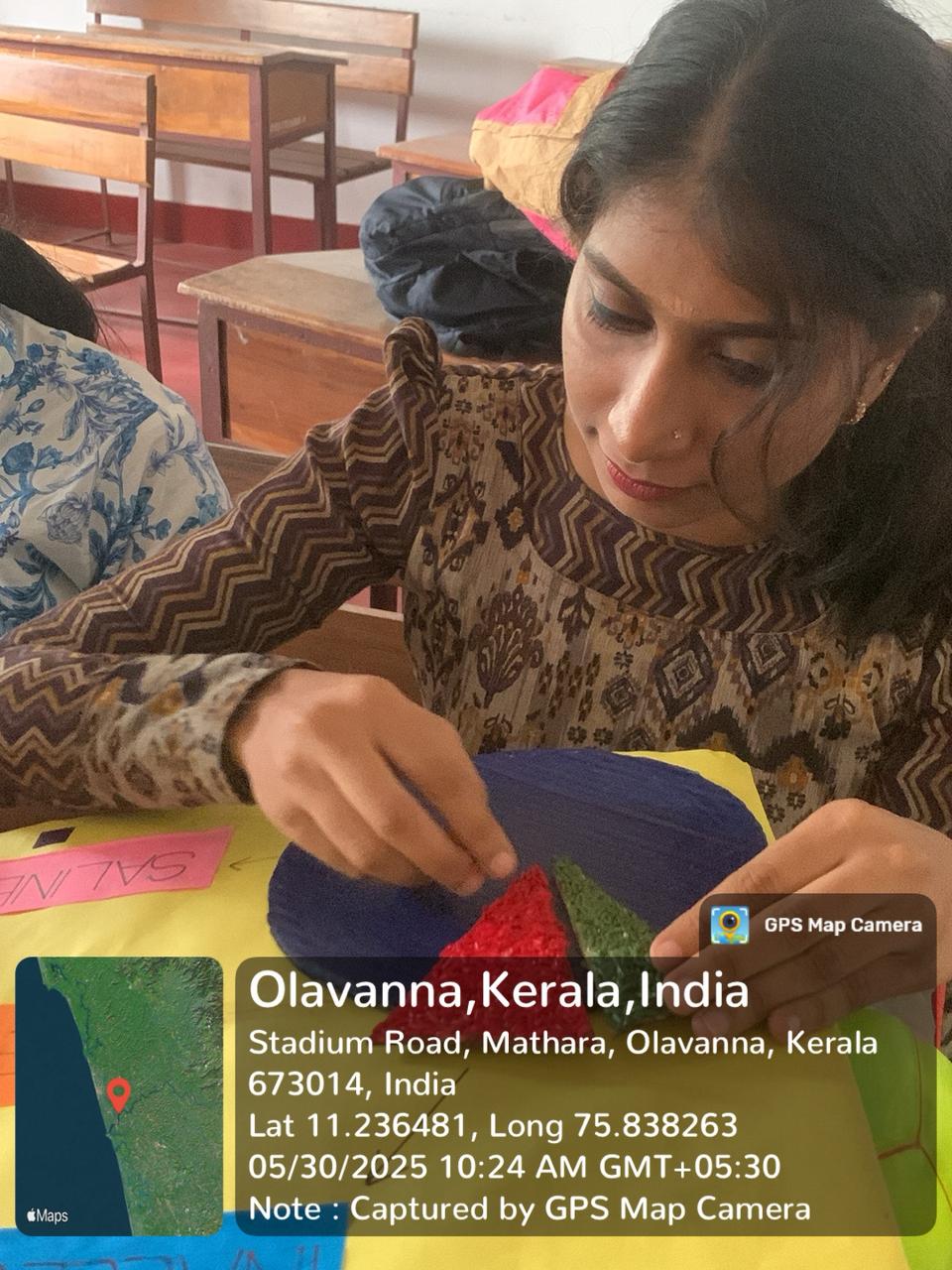
PREPARATION OF LEARNING AIDS
Report on Preparation of Learning Aids
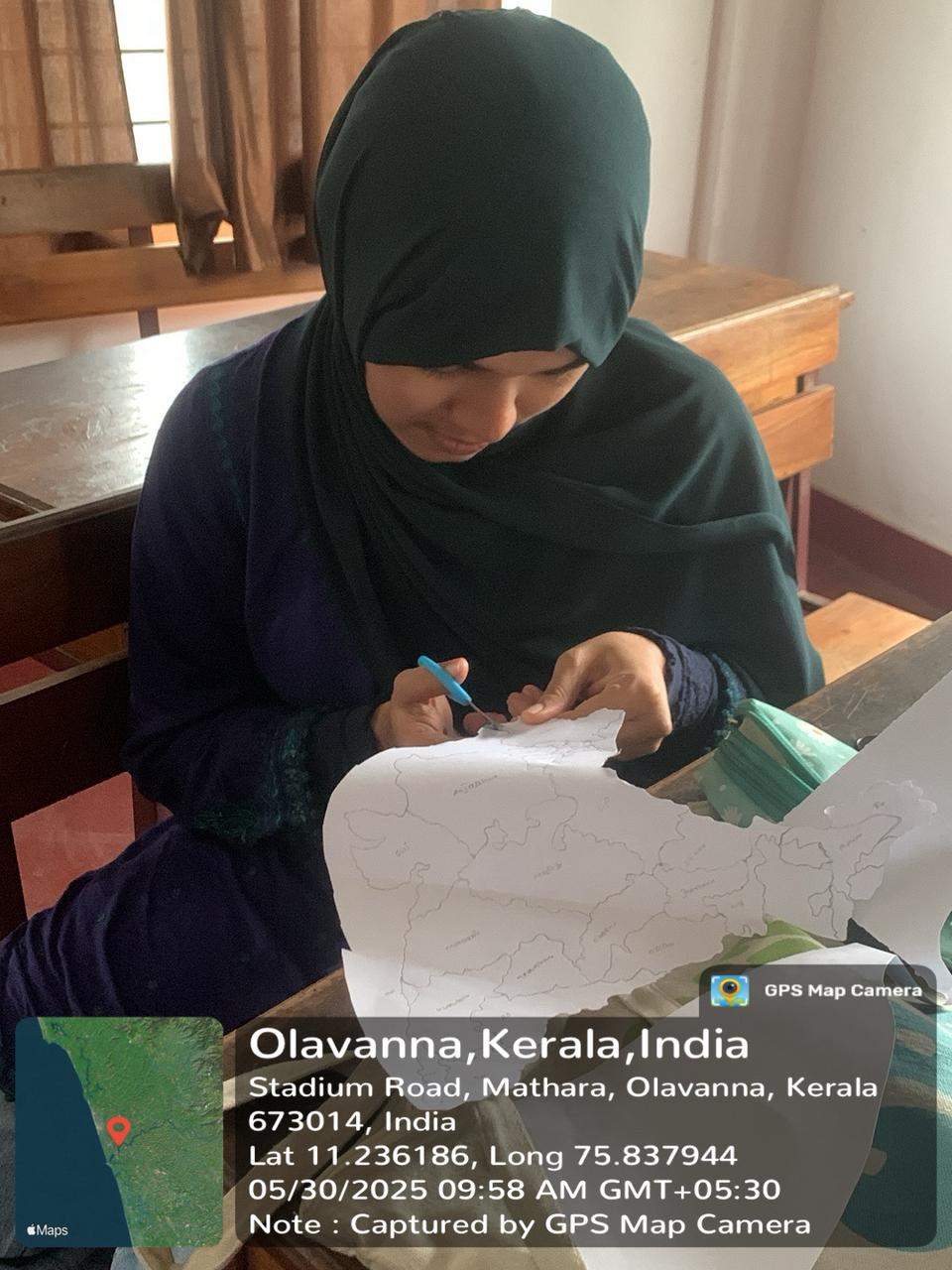
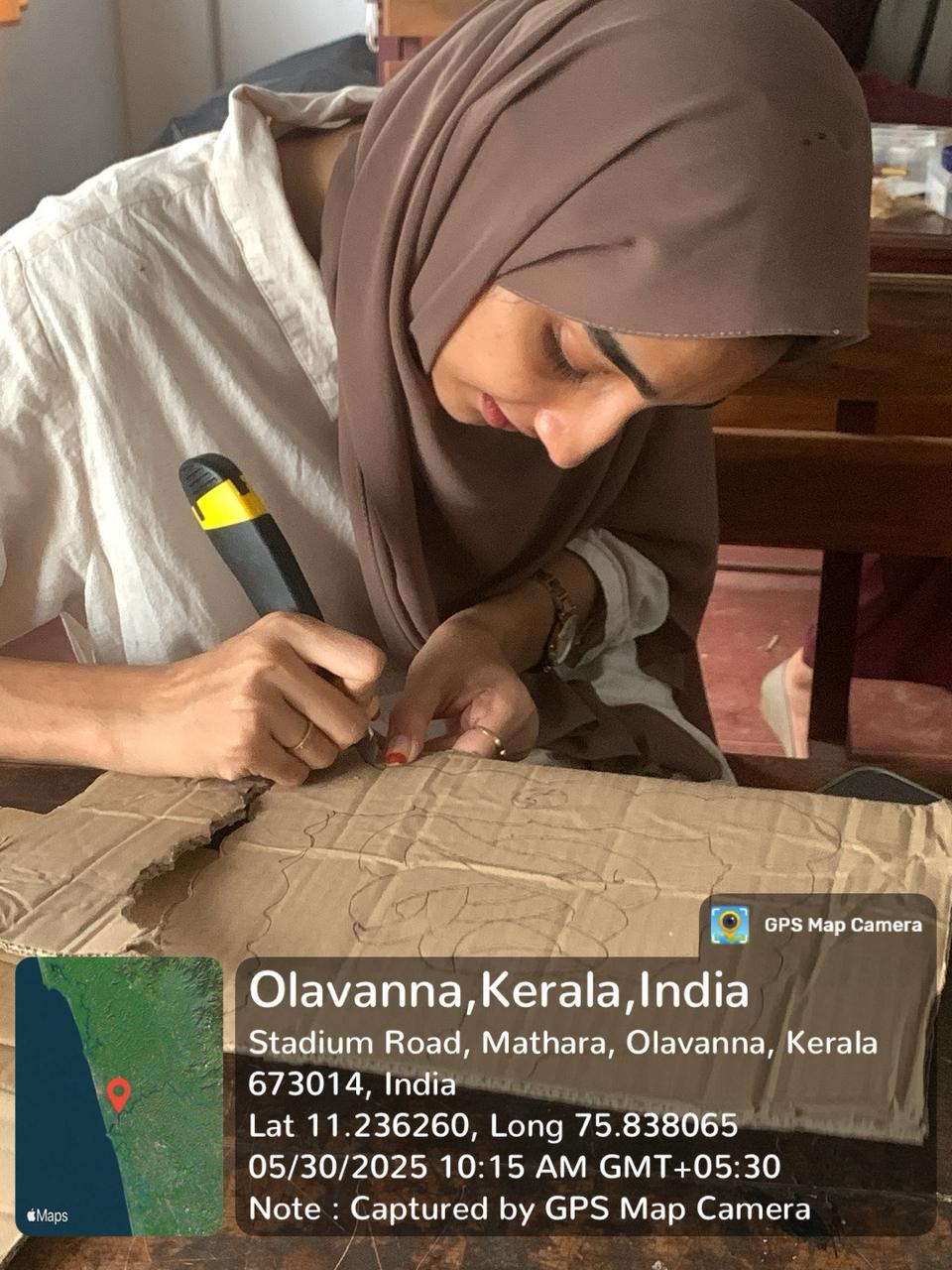
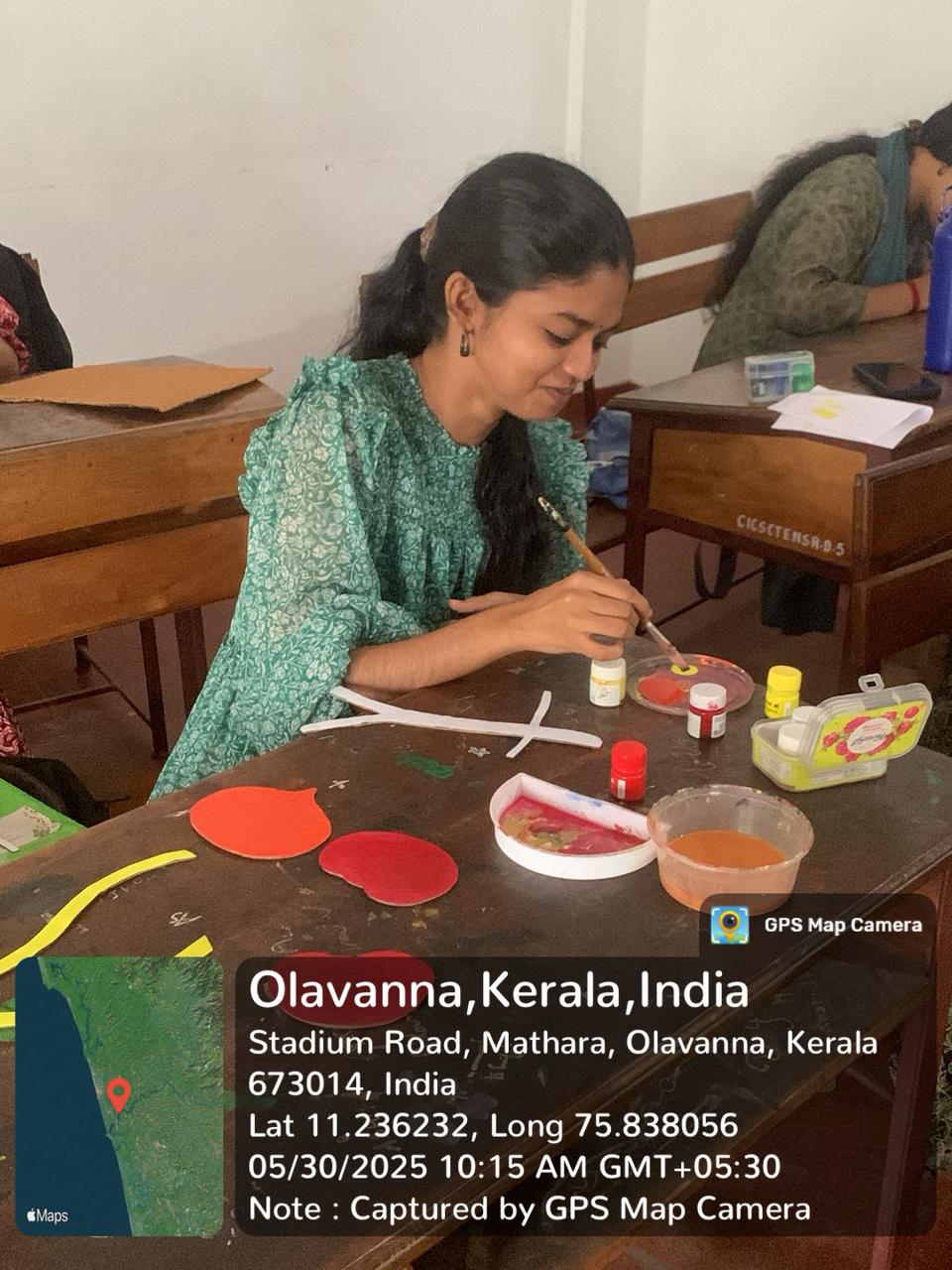
As part of the B.Ed. curriculum, our college conducted a Teaching-Learning Material Preparation session to equip student-teachers with the practical skills required to design effective instructional aids. The activity was carried out separately by each optional subject, ensuring that the materials prepared were closely aligned with subject-specific content and learning objectives. The initiative aimed at enhancing classroom teaching by encouraging the development and use of creative, learner-friendly, and curriculum-based learning aids.
The primary objective of this workshop was to enable student-teachers to design and develop various teaching aids that would enhance classroom engagement and learning outcomes. The session focused on fostering innovation, creativity, and craftsmanship in the preparation of materials such as charts and models. It also aimed to help trainees understand the importance of integrating self-made teaching aids into real classroom settings to support learner comprehension and attention.
A variety of cost-effective and easily available materials were used during the preparation process, including chart papers, cardboard, colored papers, sketch pens, markers, scissors, glue, watercolors, rulers, printed visuals, and materials required for movement like flaps, sliders, and rotating parts. These materials allowed the trainees to produce learning aids that were visually appealing, informative, and durable for classroom use.
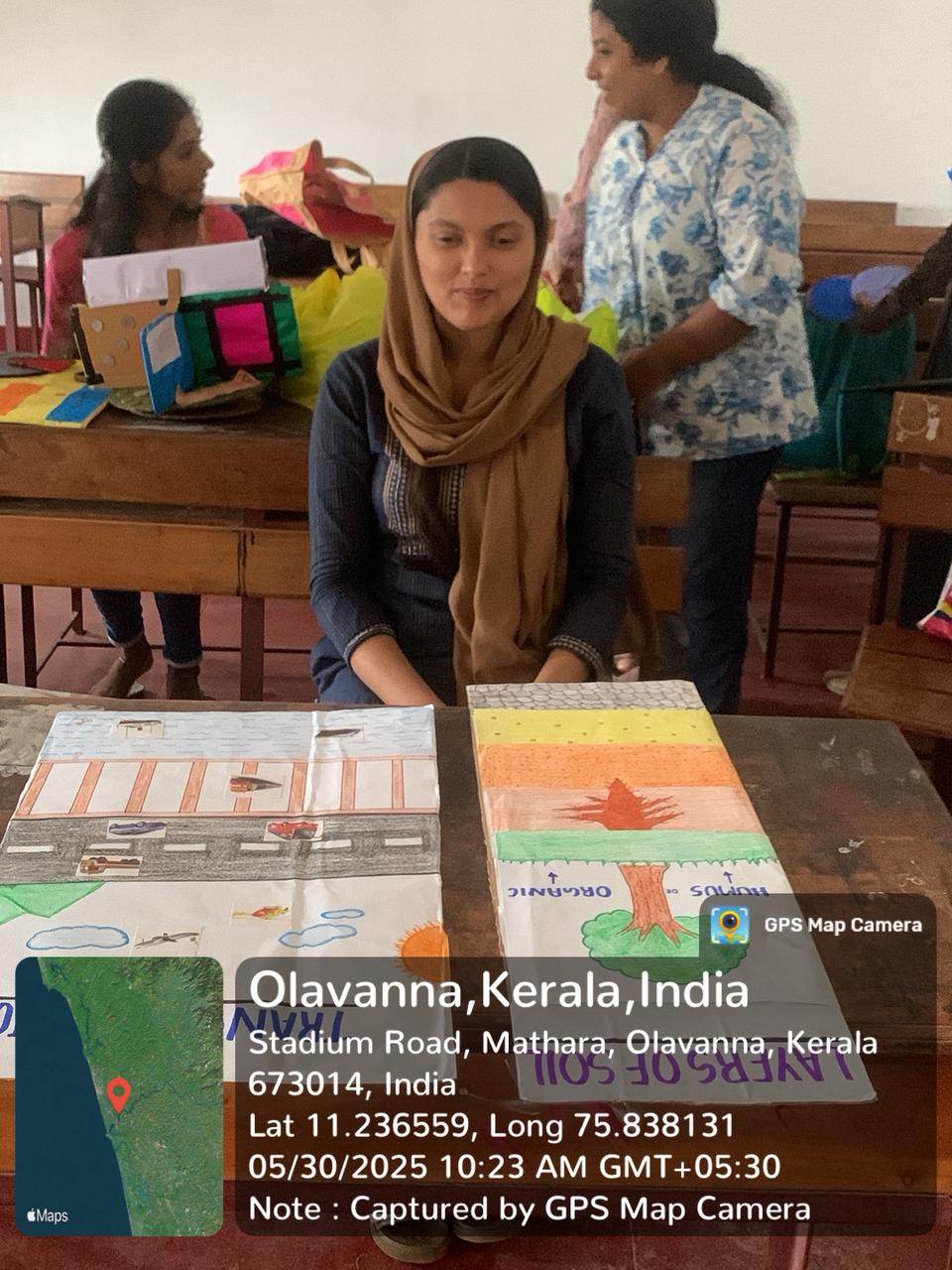
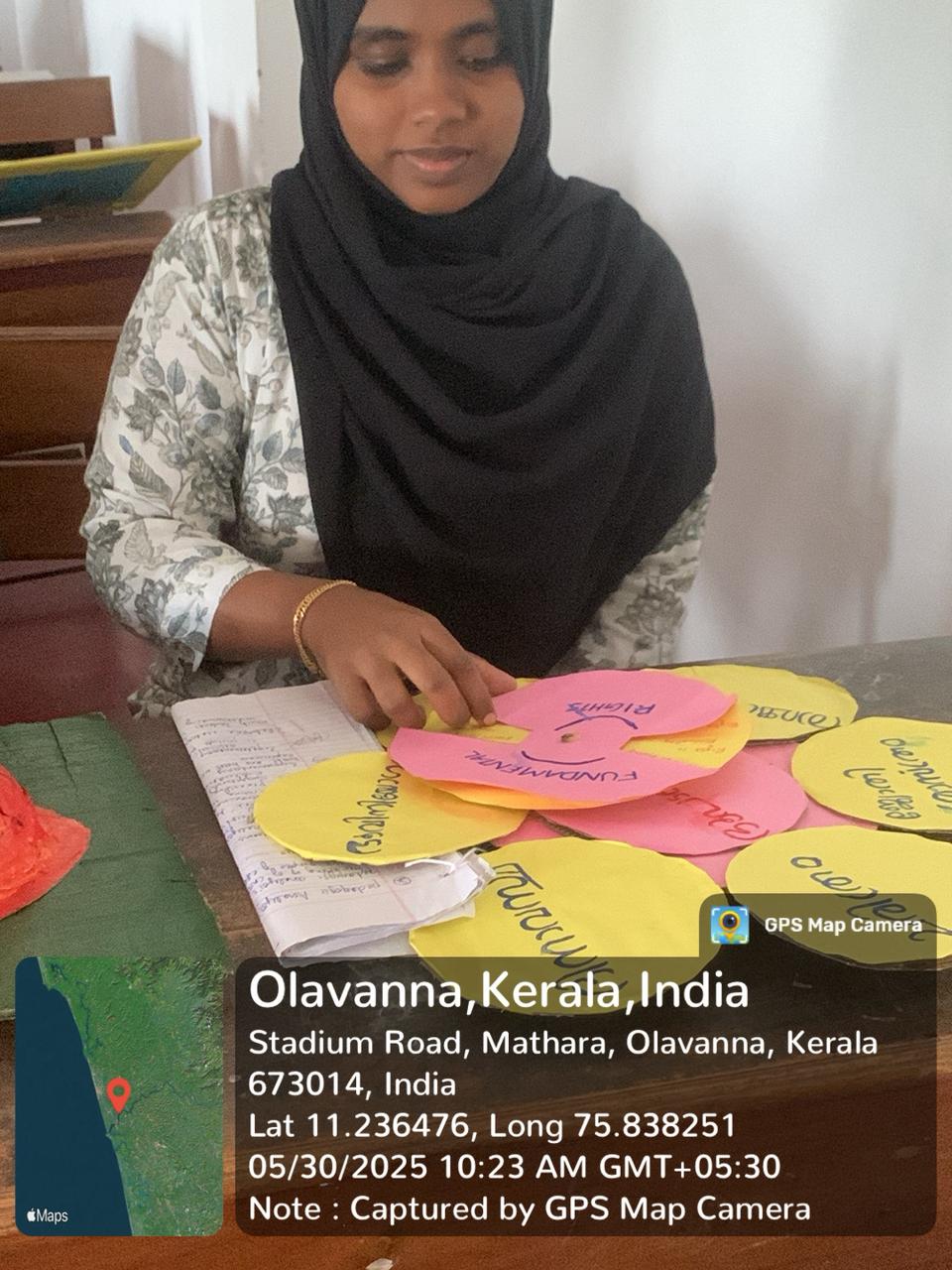
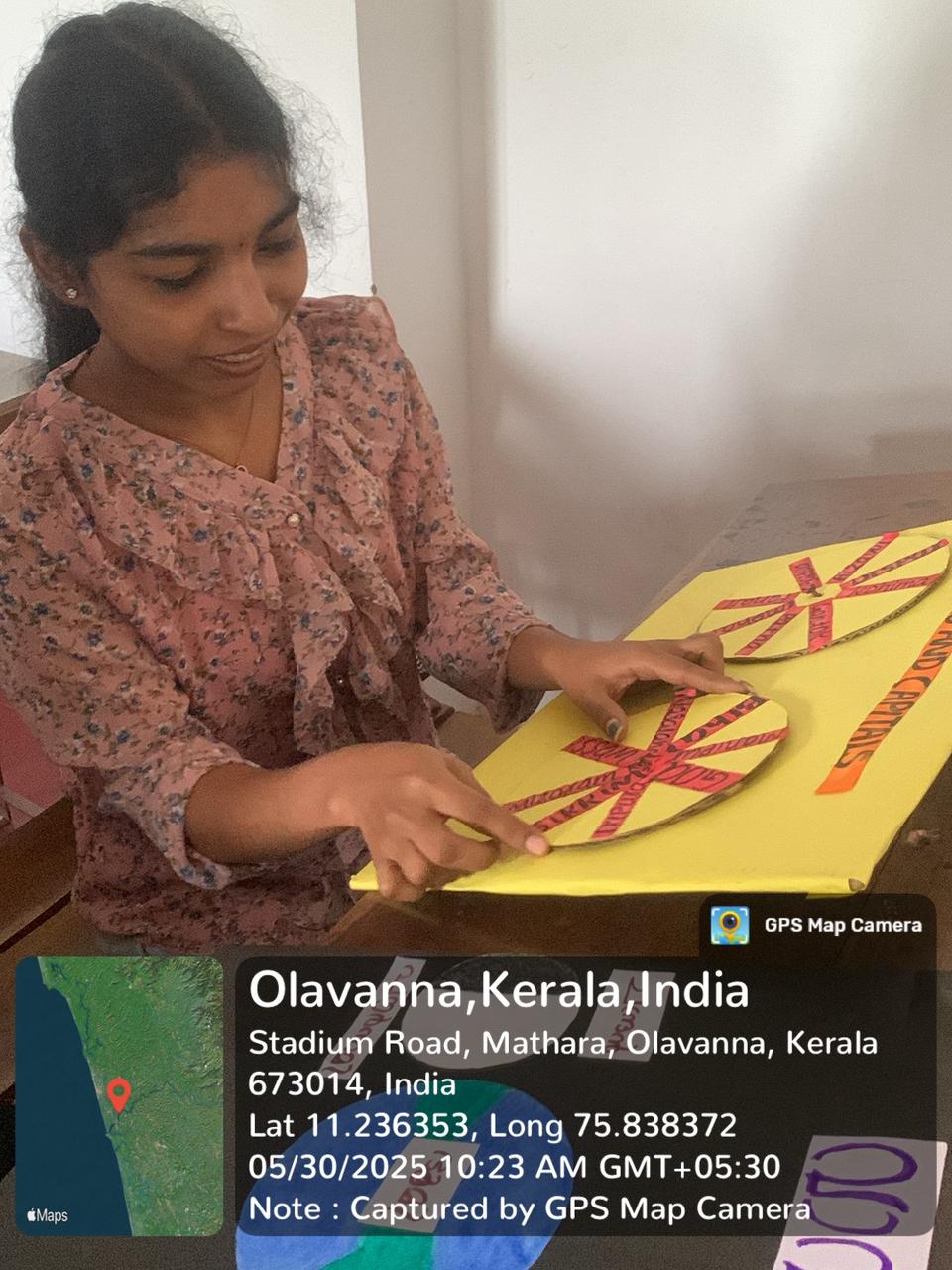
The learning aids prepared by student-teachers included multiple types of charts and models. Among the charts, content charts were used to summarize and highlight essential information in an organized format, while flip charts helped in presenting content sequentially, which is useful for step-by-step learning. Picture charts incorporated visuals with labels or contextual explanations, particularly useful for younger or visual learners. Tabular charts were created to present comparisons or categories of information in a structured, easy-to-understand manner.
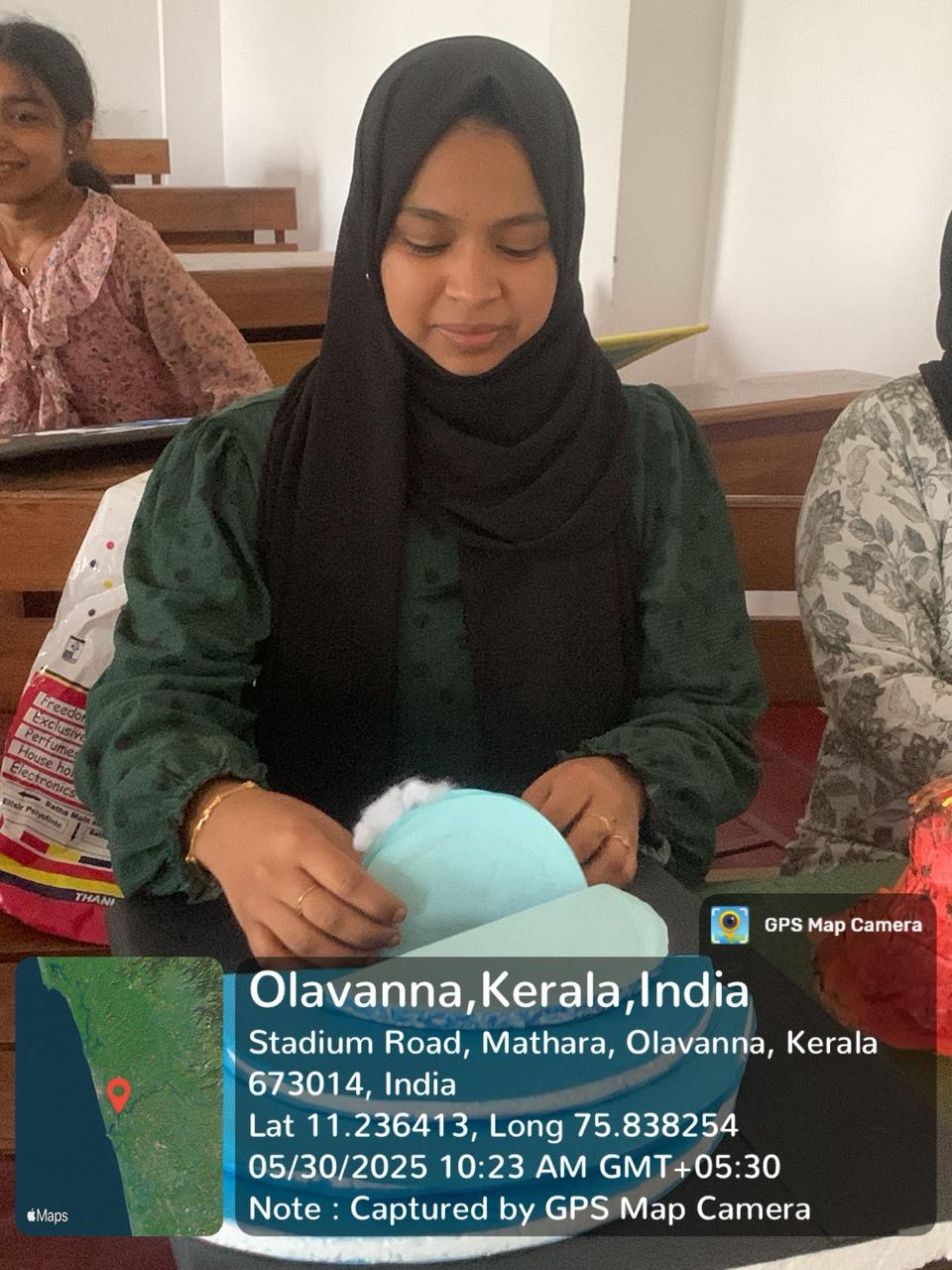
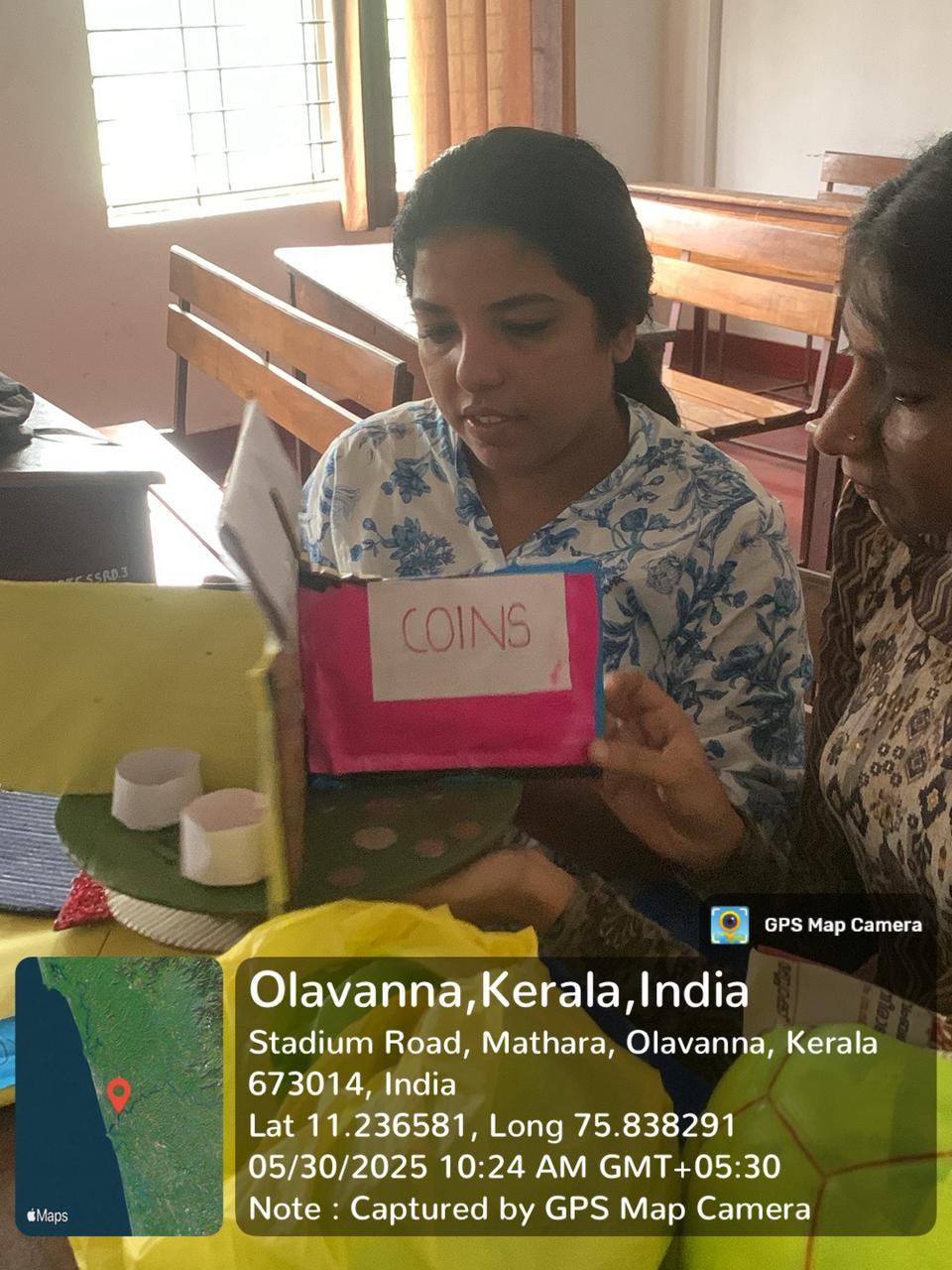
In addition to charts, trainees also designed models to support experiential learning. Still models were static three-dimensional representations used to visually reinforce concepts, places, or scenes that might otherwise be abstract. Working models, on the other hand, incorporated interactive
elements such as sliders, flaps, or turning parts to make learning more hands-on and engaging. These models were particularly effective in reinforcing concepts through student interaction and
observation.
This workshop significantly contributed to the professional development of future teachers. Through the creation of teaching aids, trainees learned to apply design principles such as clarity, balance, and proportion, while also ensuring that materials were age-appropriate and aligned with curriculum standards. The exercise enhanced their visual presentation skills, fine motor coordination, and overall confidence in integrating instructional materials into their practice teaching sessions.
The preparation of learning aids also holds high pedagogical relevance. These materials cater to diverse learning styles—visual, auditory, and kinesthetic—thereby supporting inclusive education. They help simplify complex ideas, increase student engagement, promote memory retention, and encourage classroom interaction. The workshop fostered collaborative learning among peers and encouraged innovative thinking in material design.
In conclusion, the Teaching-Learning Material Preparation session proved to be a highly effective and enriching component of the B.Ed. training program. It provided student-teachers with a meaningful opportunity to transform theoretical knowledge into practical teaching tools. Such hands-on experiences empower future educators to create inclusive, engaging, and conceptually strong learning environments.